- London is Blue Dispatch
- Posts
- Liam Rosenior Tactical Analysis: Strasbourg [25/26]
Liam Rosenior Tactical Analysis: Strasbourg [25/26]
A comprehensive look into Liam Rosenior's work at Strasbourg this season, tweaks from his first season, and what Chelsea can expect from the 41-year-old Englishman.

Sam GR
January 11, 2026
After a 5-1 dismantling of Charlton in his first game as Chelsea boss, all eyes now shift to a monumental clash against Arsenal which will prove to be Liam Rosenior’s first litmus test. There is, however, ample curiosity as to what this Chelsea side’s identity will become under their new manager. This week, we dive deep into Liam’s work at Strasbourg, and find where the strengths and weaknesses could be.
The System
While both Rosenior and Maresca consider the same two managers as their ideal reference (Pep & De Zerbi), Maresca is, by some distance, more staunchly wedded to his core principles. During his season-and-a-half tenure, his trusty 4-2-3-1 was deployed 79 times [3,483 mins], with the occasional 4-3-3 and a 2-striker iteration making a rare appearance in the UECL campaign. In his earlier games he preferred his box midfield, but eventually he moved towards a diamond, allowing him to utilize Enzo Fernandez, Cole Palmer and an extra AM to directly target the last line on & off the ball.

Rosenior, by contrast, used 8 different systems in his first season at Strasbourg, experimenting with a back 4, a back 3, a double pivot, a 3-man engine room, a lone striker, a 2-striker system, a system with 2 wingers and the same one with 2 AMs. While Maresca gained notoriety for forcing players into his blueprint [Gusto/James at CM, Caicedo at RB], Rosenior took a good chunk of his first season trying to understand his players’ strengths, limitations and ideal fit.
Out of Possession
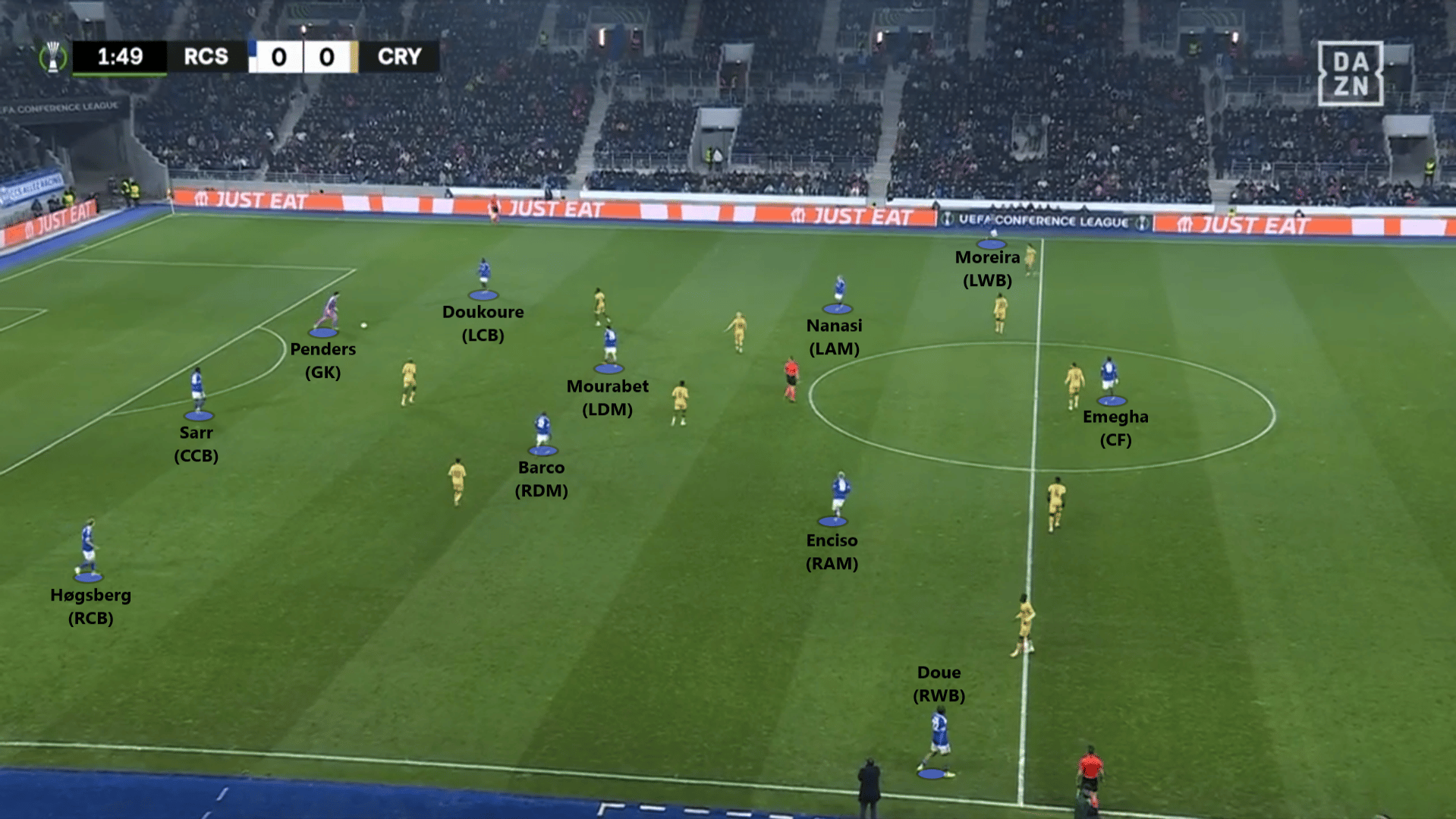
Like Chelsea, Strasbourg possess one of Europe’s youngest squads and like a front-foot approach relying on a man-2-man approach across the pitch. Chelsea’s press has been the PL’s most aggressive this season with a ppda of 10.1; Strasbourg are 9th in Ligue 1 with 11.8. Interestingly, Strasbourg’s average pressing start distance is 44.3 meters from the opposition goal; that would place them 2nd in the PL behind Man City. Strasbourg’s press has also yielded 8.4 high turnovers a game, compared to Chelsea’s 7.2. Only PSG in Ligue 1 have managed more goals from high turnovers (7) than Strasbourg. (5)


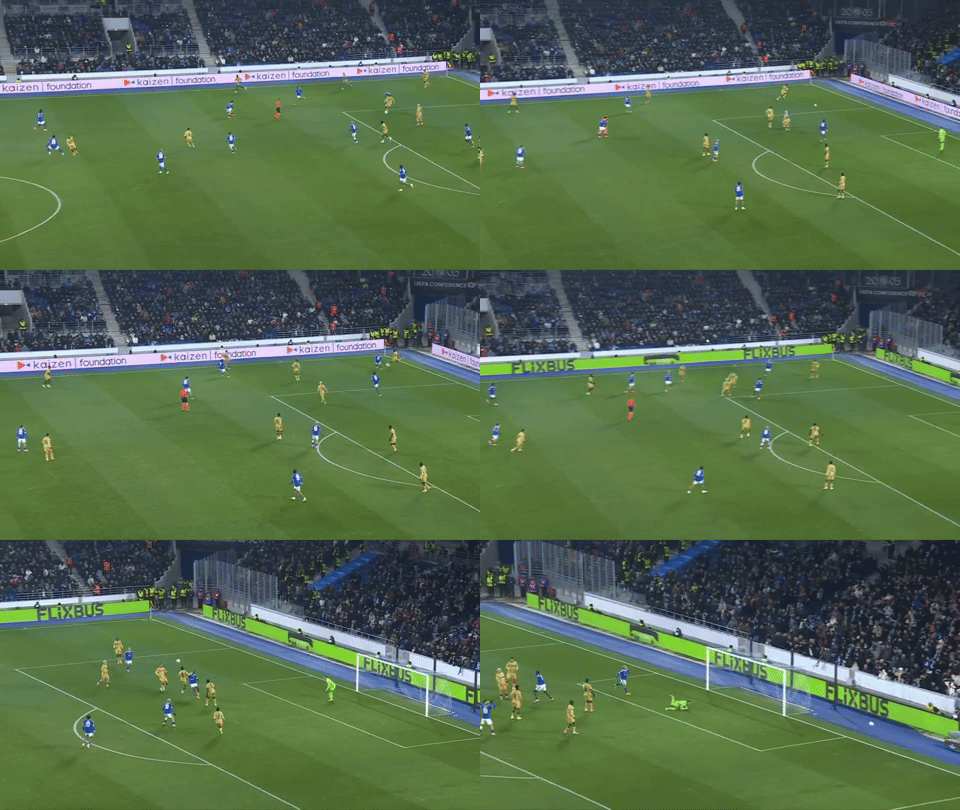

In deeper areas, Strasbourg usually take up an aggressive midblock, the shape morphs situationally. It can be a 4-4-1-1 or a 4-4-2, or even an aggressive 5-2-3 like Crystal Palace, looking to close off central spaces and relying on aggressive back 5 to step out and intercept centrally. In deeper areas, Strasbourg take up a variety of shapes and take a more hybrid approach to minimize volatility against fluid sides and rotations.
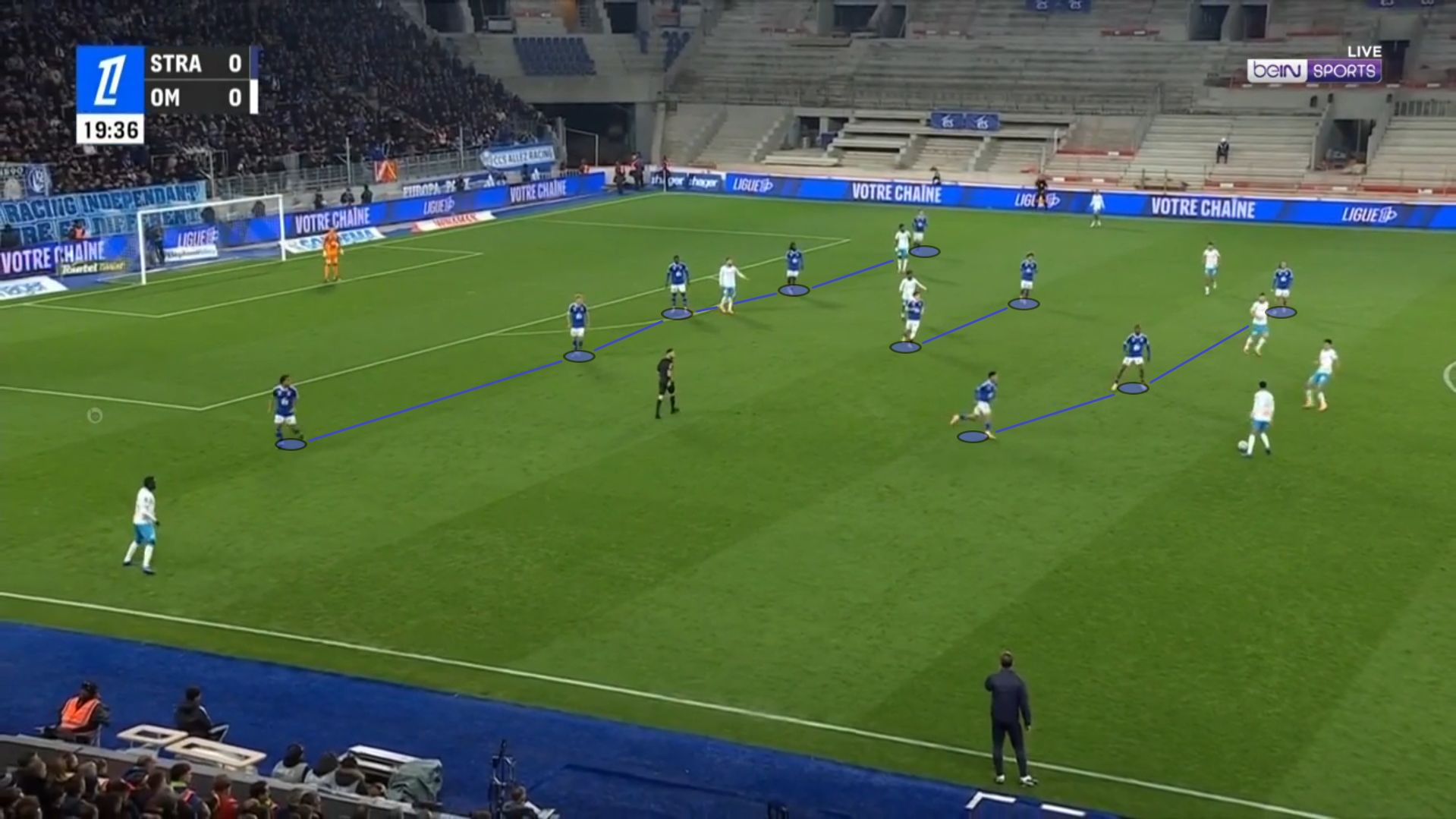
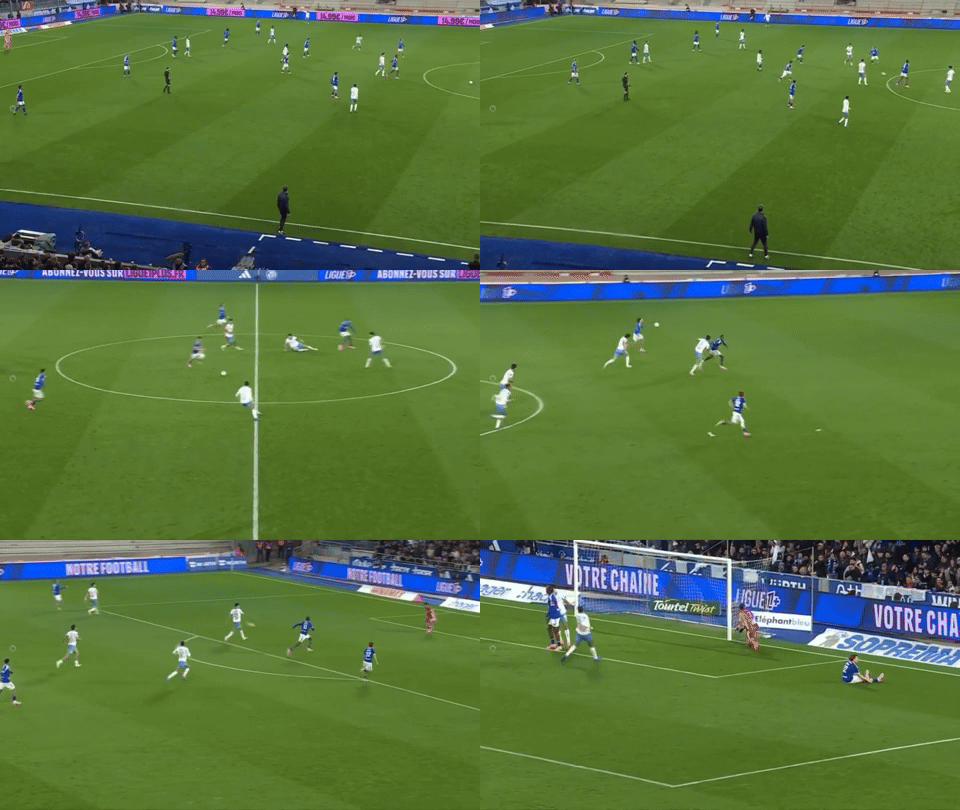
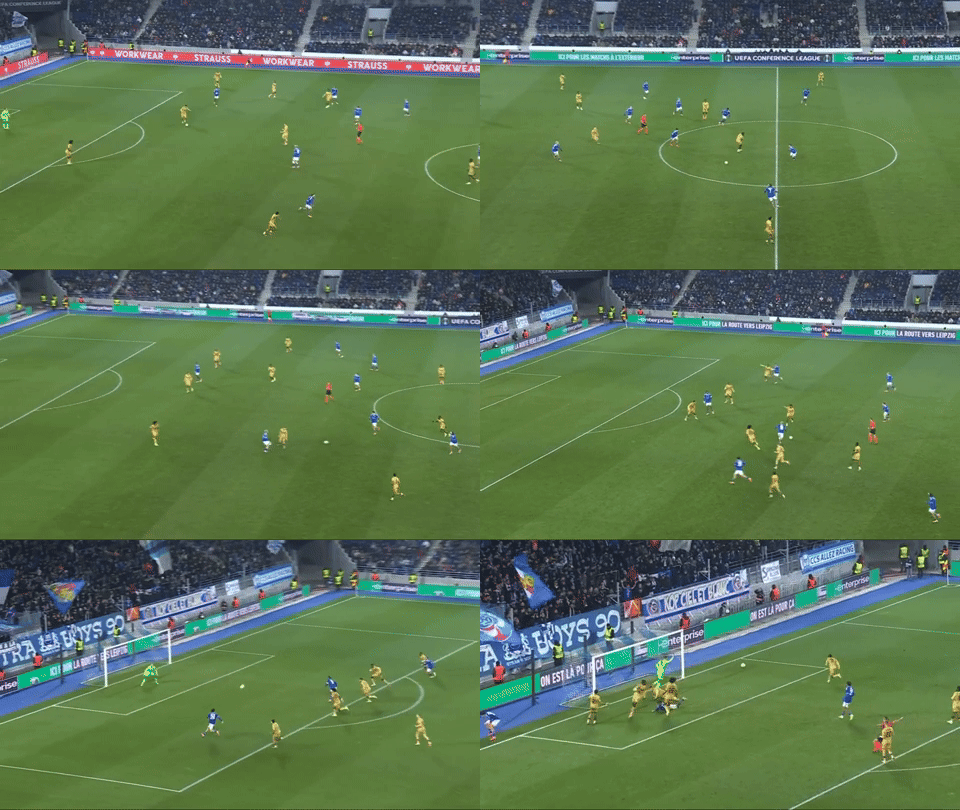
Strasbourg have done well under Rosenior, managing the 4th best npxG against in Ligue 1 and conceding the 5th fewest shots. Chelsea rank similarly in the PL, but have conceded high value shots, mostly from transitions, direct balls targeting the CBs and individual errors. Chelsea struggle with all 3 as well, which will make Rosenior’s job that much more interesting in the coming weeks.
OOP Weakness
With Rosenior’s FB/WB(s) tasked with holding width and supporting the attack, teams have tried to exploit the space left by these marauding runs. In transition, there have been quick switches to the vacated flank to isolate a winger against the CB, usually on Doue’s side.


Profile the Attack
This is one of Rosenior’s standout strengths. First let’s take a look at how he uses the same player in two different roles in the same system.
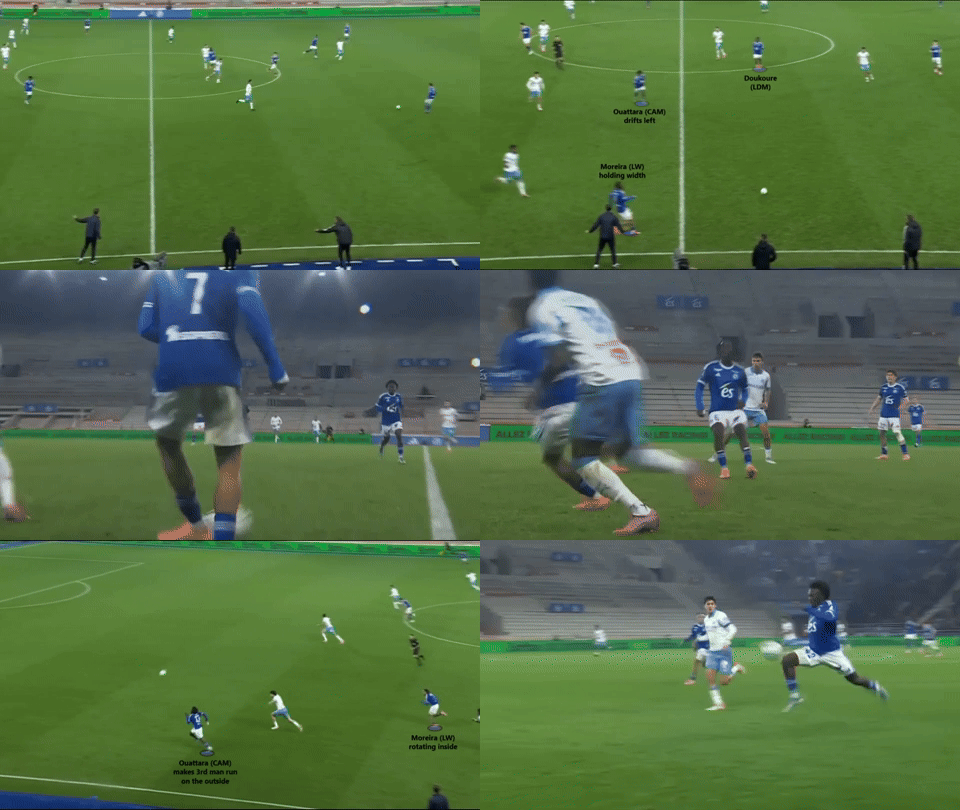
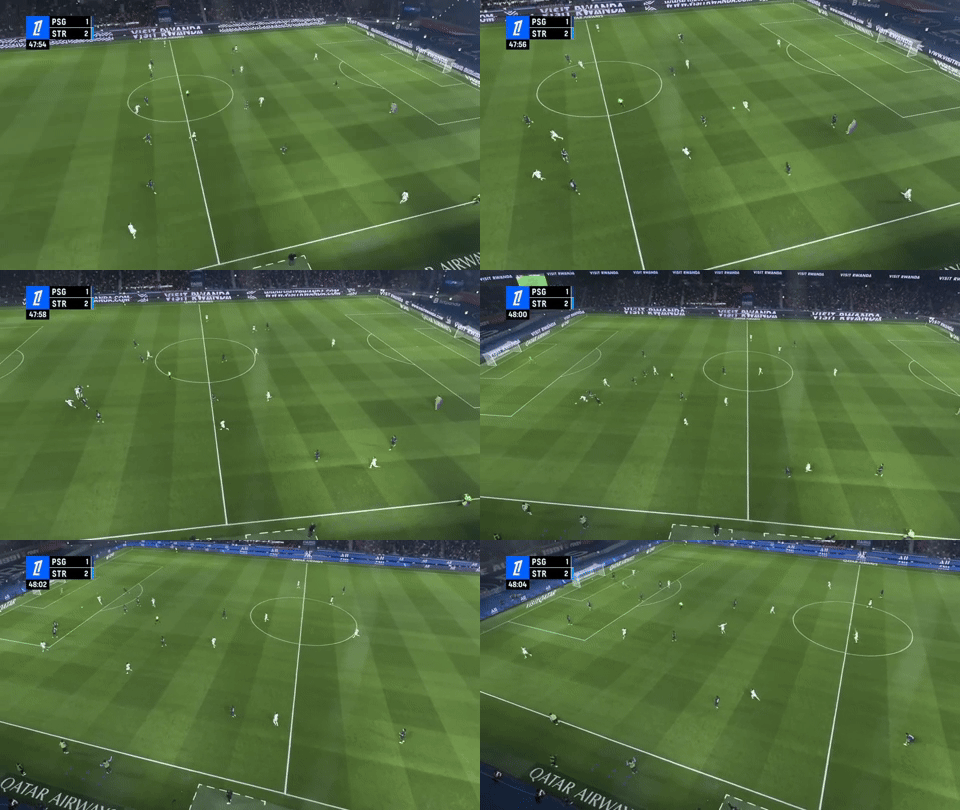
In this 3-4-2-1 vs Angers, Rosenior played Diego Moreira, a left winger, at left wingback. With Lemarechal subbed, Julio Enciso comes on at LAM. Moreira is a direct winger by trade, very good at attacking space and taking on players. Enciso is an AM, an exceptional shooter from in and around the box. He struggles in wide areas, and isn’t accomplished at take ons. In this 3-4-2-1 iteration, Rosenior’s LWB holds width, and Enciso is given license move into his preferred central areas.
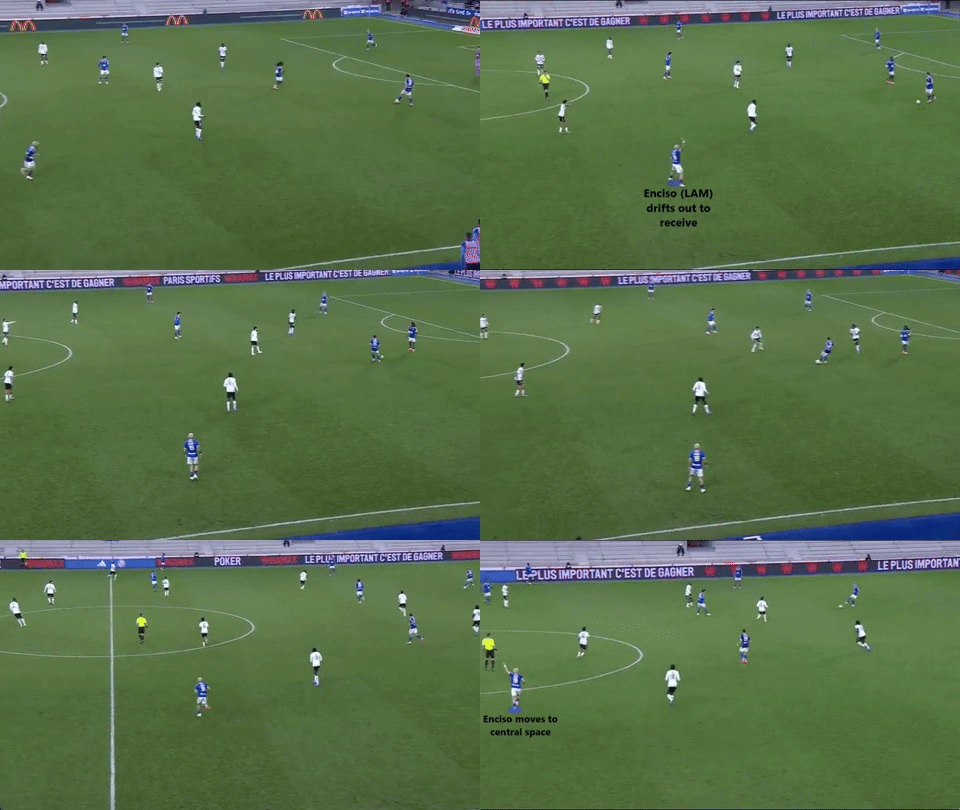
Here’s the 3-4-2-1 vs PSG, but with a slight tweak - Moreira is now at LAM and his role at LWB is taken by Ouattara, a central midfielder by trade. Conventionally, one would expect roles to work the same way vs Angers - Ouattara, the WB, holding width, and Moreira moving centrally. Rosenior though does not want a CM overlapping, or his key wide threat taken away for long spells centrally.
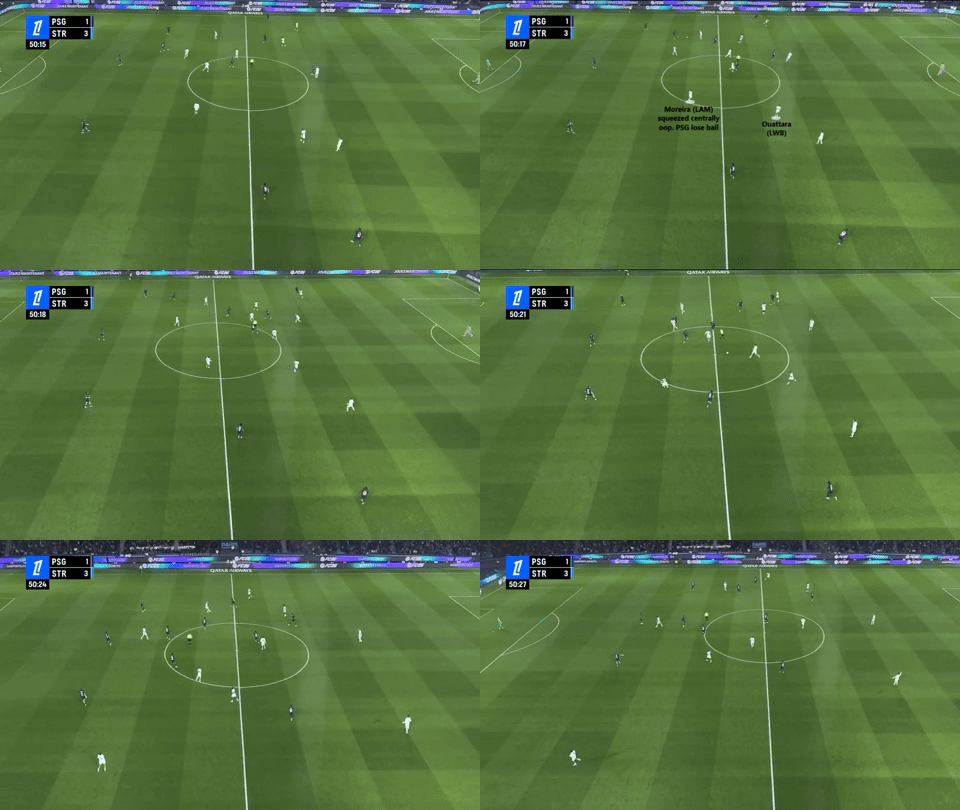
The adjustment favours both players - Ouattara, the WB, inverts into his favoured LCM position, and it is now the LAM, Moreira, holding width. The WB inverting into midfield also draws PSG’s FB narrow, opening up a switch for Moreira vs PSG’s RCB Zabarnyi.
Rosenior seems to recognize his player’s strengths to an impressive degree, and looks to minimize situations where his tactical plans/tweaks for the unit dilute individual quality.
Build Up + The Goalkeeper

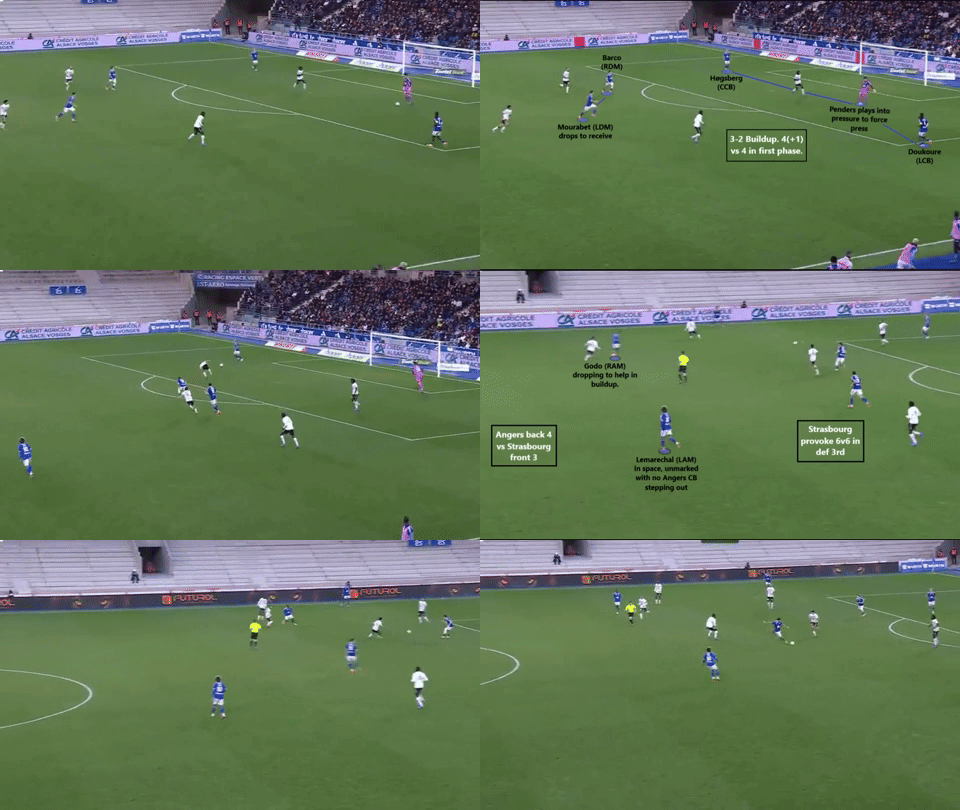
Rosenior’s build up philosophy borrows a lot on Roberto De Zerbi’s body of work. Provocation is a key tenet here - goalkicks within the 6 yard box from CB to GK, soles on the ball, passes into the pressure - all lures for the opponent to snap into their press. Rosenior’s active, unshackled FBs also allow progression via the flanks, something Maresca’s Chelsea struggled to do against sides blocking the center.

Strasbourg usually built with a stable 4-2, compared to Maresca’s flexible 3-1, where AMs time drops next to Caicedo to receive and pull opposition players out of possession. On loan Chelsea GK Mike Penders is a massive part of both low and high build ups, usually splitting the CBs and allowing the more dynamic FB/WB to hold width high up the pitch.
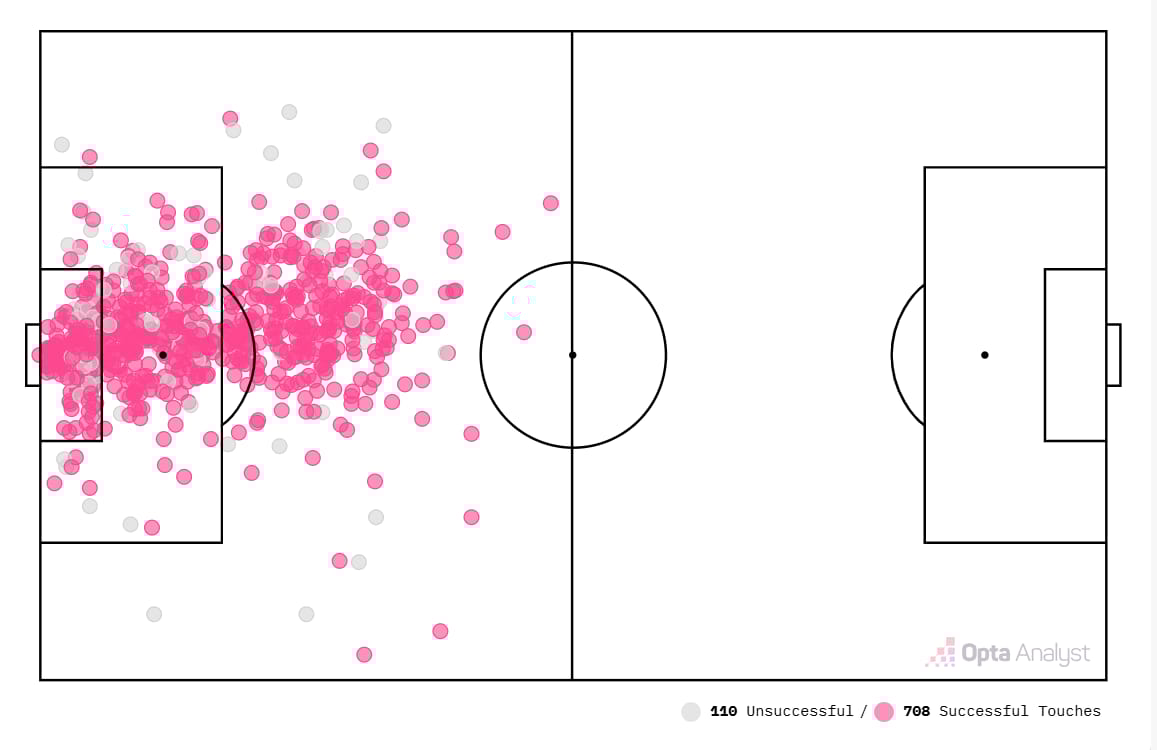
Mike Penders Touch Map - 25/26
Penders has been unique - no GK in Europe’s top 5 leagues has had more touches outside the box than the Belgian wonderkid (40.2.) Rosenior has encouraged Penders to hold an aggressive position outside the box, functioning as an auxiliary CB. The advanced position is also a provocation for opposition teams to engage their press, which feeds into what Rosenior wants, to play through the pressure and manufacture artificial transitions for his quick attackers. He is also encouraged to hit long switches over the last line if he spots 1v1s or 2v2s (the latter usually targeting the left flank.)
The big difference between Maresca’s build up last season and Rosenior is the degree of risk. While Maresca insisted on passes into the congested center to provoke opponents, Rosenior prefers moving the ball wide first to find options in the underloaded center. A lot of attacks continue down the flanks - with rotations between the FB/WB, pivot and the AM/winger on the corresponding side. The AMs/WBs are also encouraged to underlap and target 3v3s in the box.
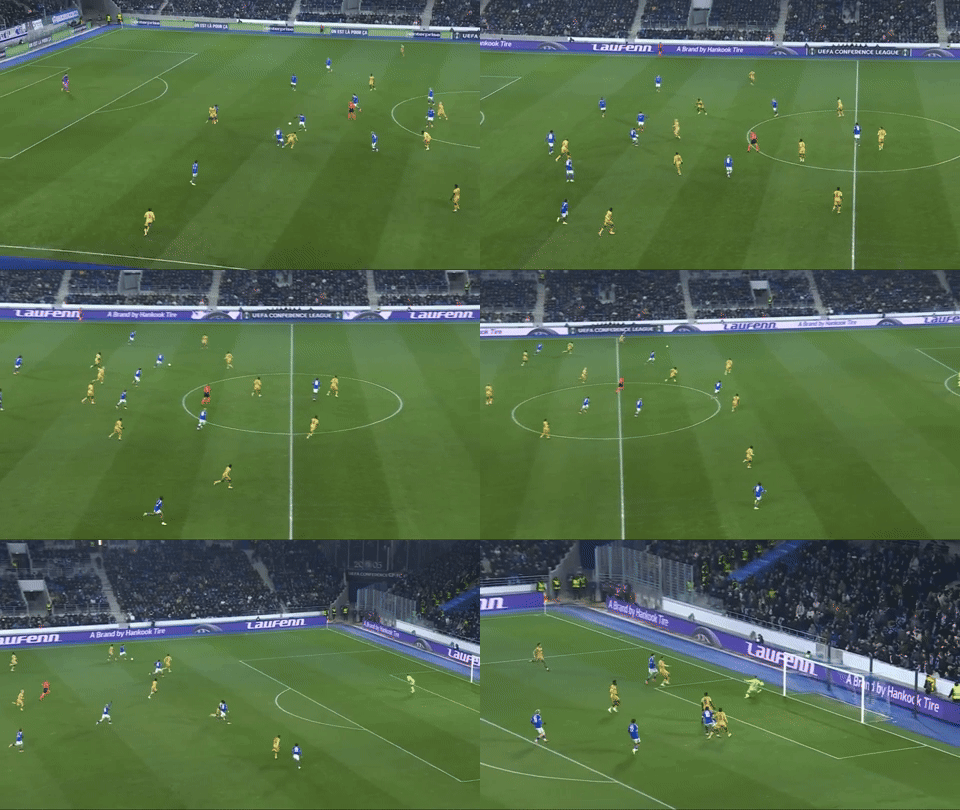

Both approaches have their cons - since being appointed Chelsea manager, Maresca’s Blues committed 61 errors leading to shots or goals, second only to Villa & Spurs in 1st. Strasbourg’s insistence on building out wide leads to limited passing options and a fair number of giveaways in their own defensive 3rd, leading to dangerous transitions for the opposition. Strasbourg sit top of Ligue 1 this season for errors leading to shots.
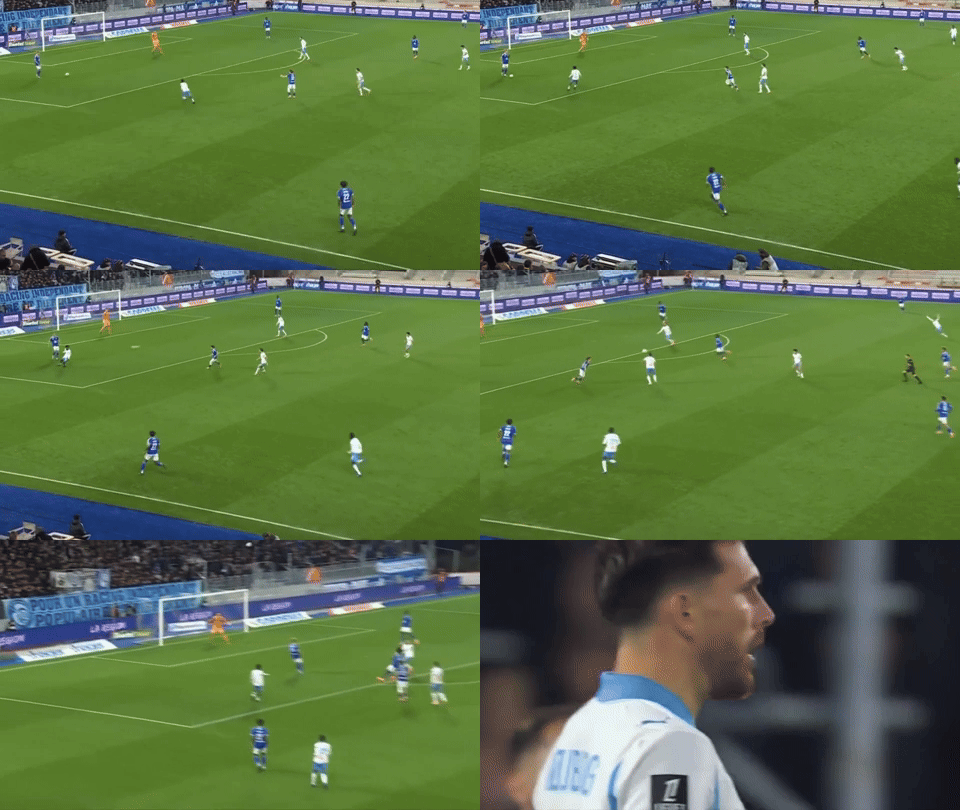
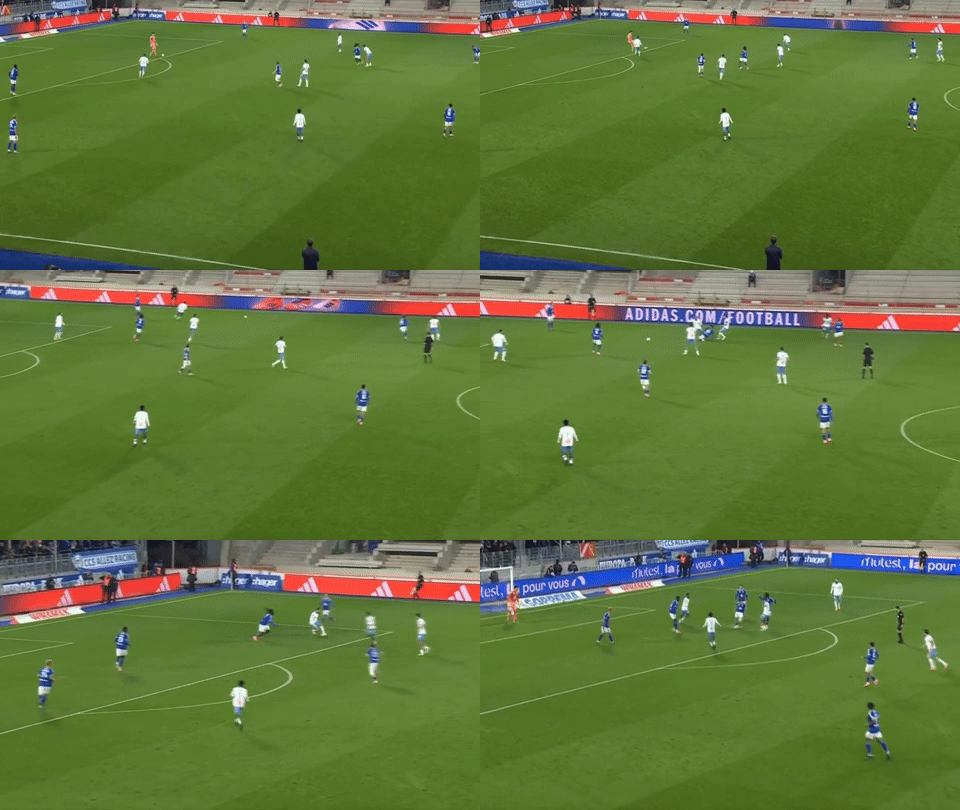
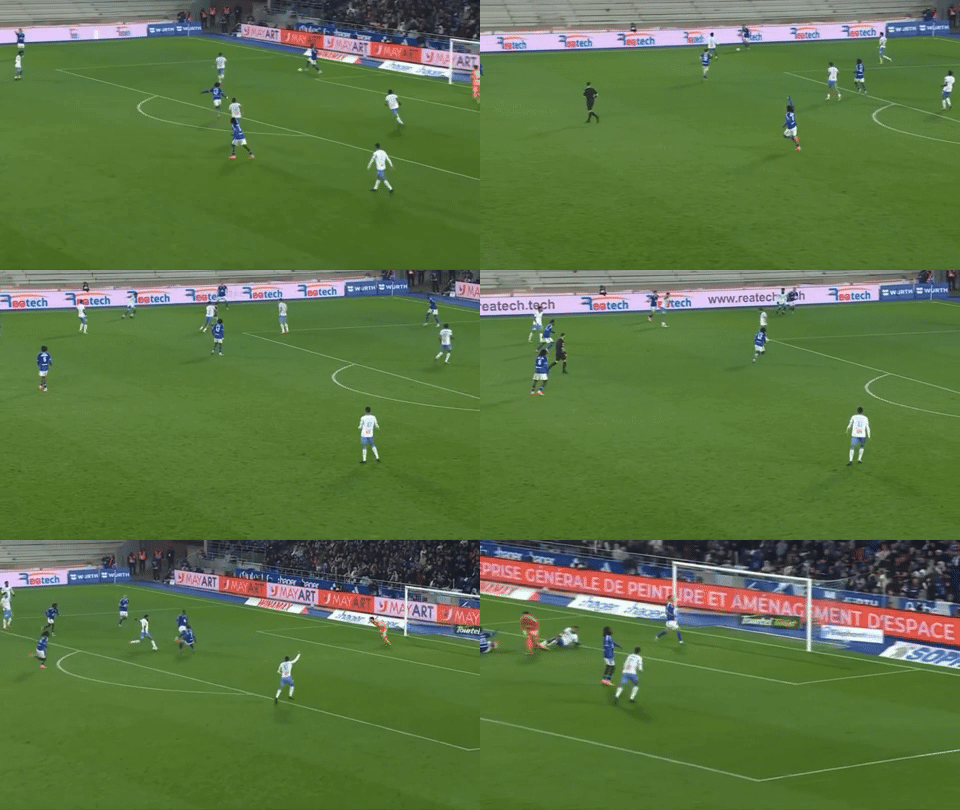

The reluctance, or the lack of risk, when building centrally seems to stem from Rosenior perhaps acknowledging a lack of quality in playing out from the back. Penders’ advanced position has also seen more teams attempt quick lobs/first time shots to catch him out, but have so far been equal parts unfortunate and inadequate.

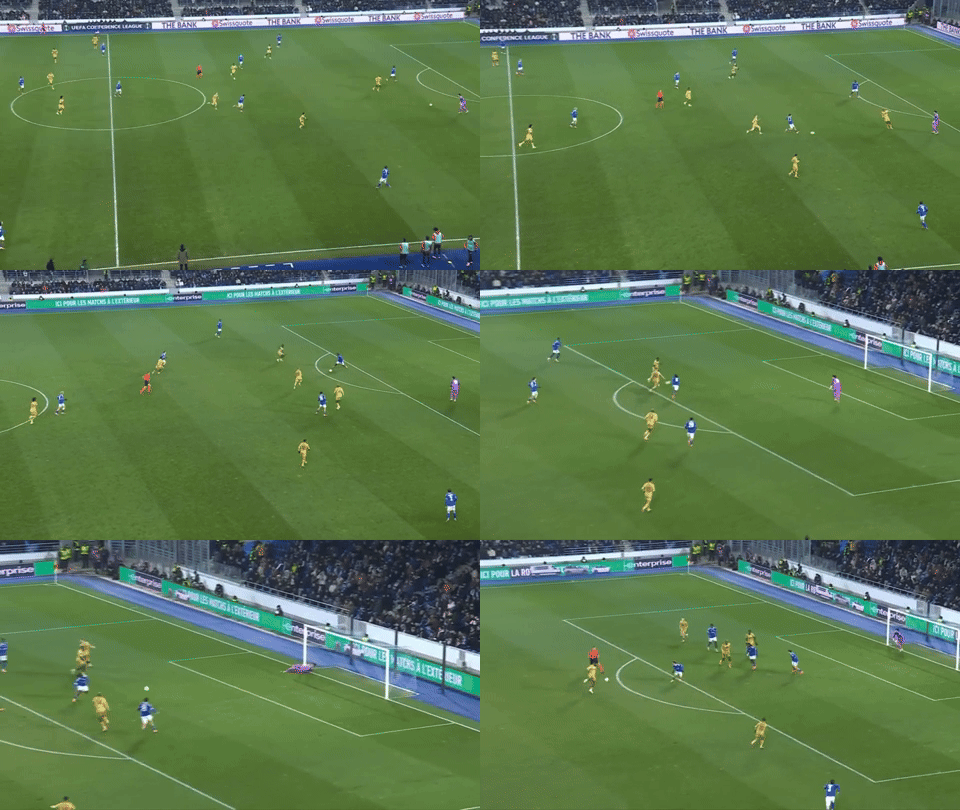

Midfield Organization
Rosenior may have switched between a back 3 and a 4 since last season but he has settled on a midfield pivot. The 2 man engine room usually sits at the base of a box midfield, but against sides trying to sit off/with lesser quality, a diamond like the one seen under Maresca also appears, with Mourabet sitting as the pivot and Barco moving closer to goal.

After starting 7 out of 9 games at leftback for Sevilla, Valentin Barco arrived at Strasbourg last season with his wonderkid reputation under intense scrutiny. Rosenior played him in his first 5 league games at WB, and quickly realized the issue. Barco featured at LB/LWB only once in the next 9 games, featuring for 80+ minutes in 7 of those games.
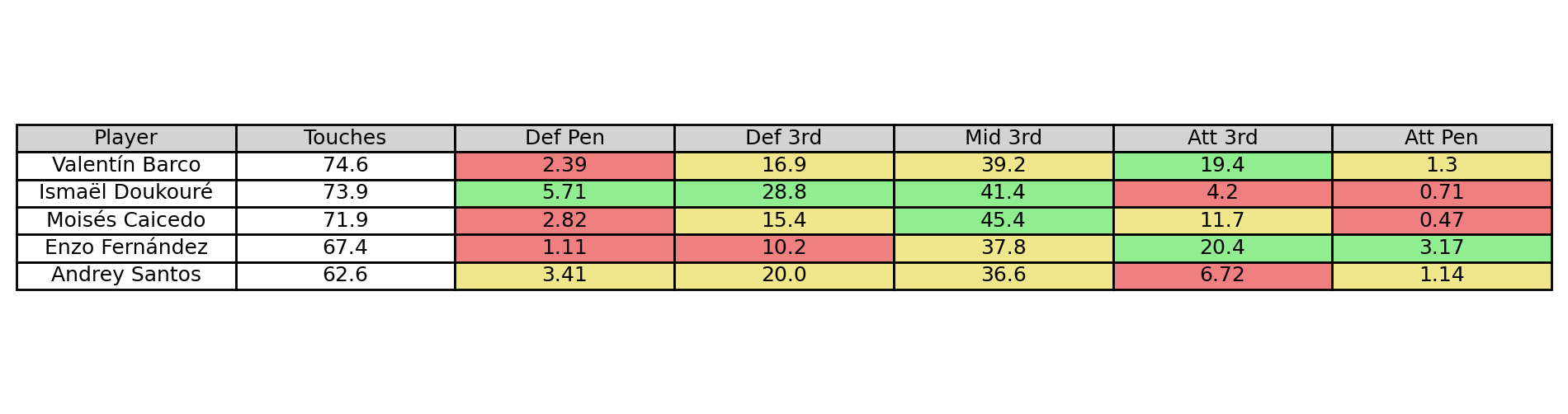
Strasbourg-Chelsea Midfield Influence Matrix
His preferred Barco-Doukoure pivot excelled at different aspects, but positional proximity is generally maintained to ensure a more disciplined counterpress. This is something Chelsea struggled with in the latter part of Maresca’s tenure, with Caicedo at lone pivot having to cover obscene amounts of ground in the 3-1-6’s rest defence.
Balance is key too - Doukoure is a versatile midfielder who can play at CM, DM, CB and RB. His influence is concentrated to his own half, usually staying close to his defensive line and slotting in to any deficiencies arising from Strasbourg’s last line stepping out.
Barco’s influence stretches across his half and into the attacking 3rd. There is no restriction on his expansive high-risk passing, and Barco regularly pulls out excellent throughballs and passes over the last line. Both players, however, seldom enter the box in open play.


Andrey Santos was another midfielder who benefitted massively from Rosenior’s tutelage. Instead of limiting Santos to a selected few responsibilities from his diverse array of strengths, Rosenior allowed Santos to participate in all phases of play - leaning on him to orchestrate build up, passing/progressing from deep and then arriving late in/around the box. Santos’ 13 G/A in 32 was a fantastic return from pivot and helped tap into Andrey’s unique unicorn profile.
Defining Enzo Fernandez
Zoning in on Enzo Fernandez’s ideal role could very well define how smoothly Rosenior’s tenure takes off. As you can see, Enzo's role in Maresca’s side is unlike any other midfielder in Strasbourg or Chelsea - the Argentinian manages around two-and-a-half times as many box touches as the rest, with defensive responsibilities minimized due to his athletic shortcomings in his own half.
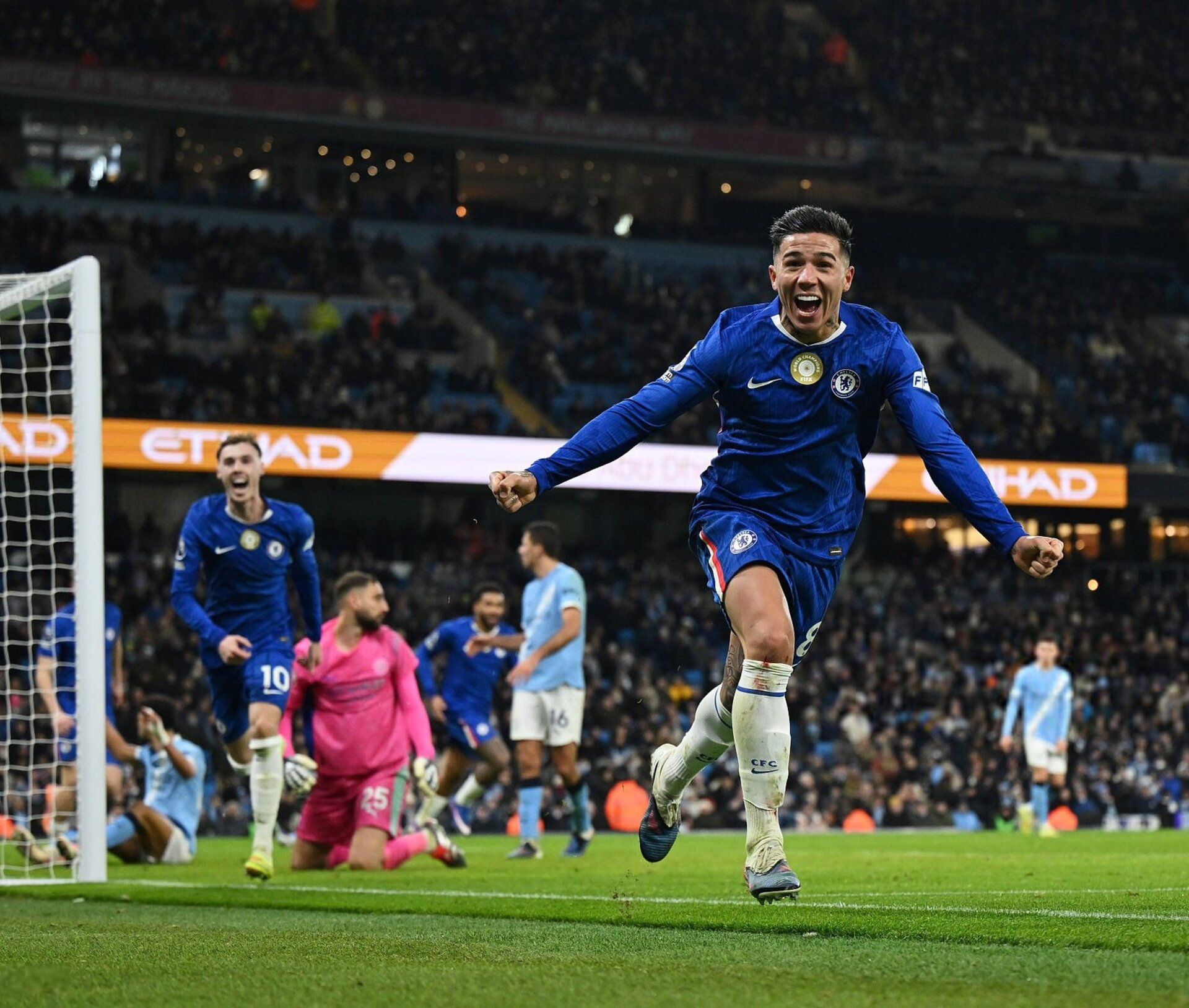
At Benfica, Enzo’s profile was closer to Barco’s at Strasbourg than it is to his role under Maresca. The Argentinian enjoyed a staggering 118.4 touches per 90 mins, a 75% increase on his current 67.4 per 90 and developed into Europe’s best deep progressor. One imagines Real Madrid’s interest during the World Cup stemmed from identifying him as the ideal Kroos successor.
Enzo’s 35 G/A in all competitions since Maresca’s appointment have proven invaluable in a shot-shy & young attack. Will Rosenior look to tweak Enzo’s role to afford him more influence across all phases as he did with Andrey? Or will Rosenior continue with an experiment that has yielded fruit? The new manager’s tendency to adapt indicates the latter as a more probable outcome, but it will be intriguing if Rosenior, like many analysts, will ponder if more should be demanded from a 100m World Cup winner.
Attacking Patterns
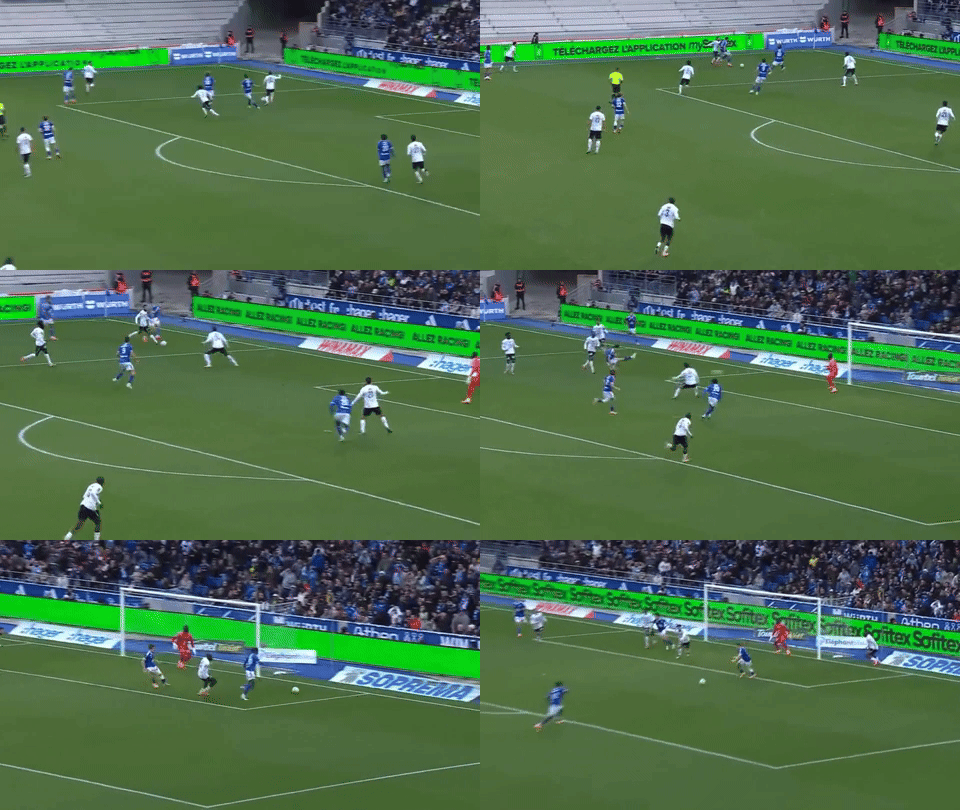
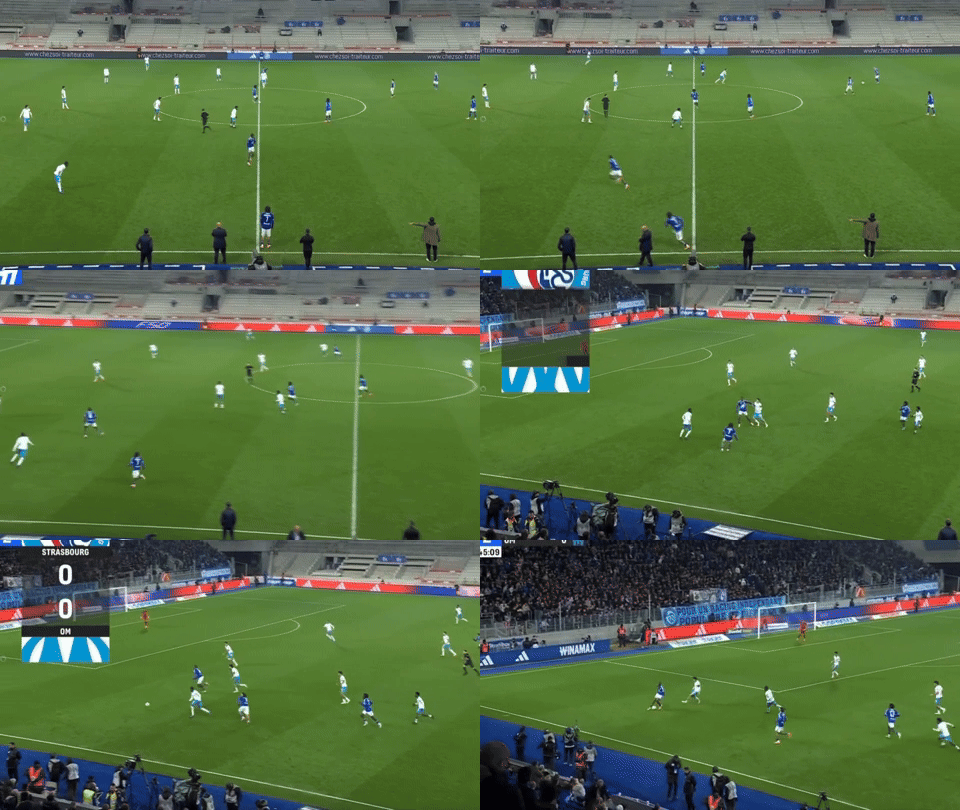
Strasbourg like attacking in a 3-2-5 with width coming from Moreira irrespective of if he’s at WB/FB and Doue, who does so from FB. Rosenior had a variety of attacking midfielders at his disposal - ranging from the inventive Seb Nanasi to the lively Felix Lemarechal. The two AMs at the top of the box midfield are given license to rotate out with the WBs, and create overloads with a fixed pivot on either side. The more dynamic winger/WB/FB is then tasked with underlapping into the box or deploying early crosses for Emegha or Panichelli.
Strasbourg’s CFs are also given roles that play to their strength. Emegha is 6’5 but lightning quick and prefers running off the shoulder in behind CBs. Barco and Doukoure are both instructed to clip balls into space when possible for Emegha to exploit this.


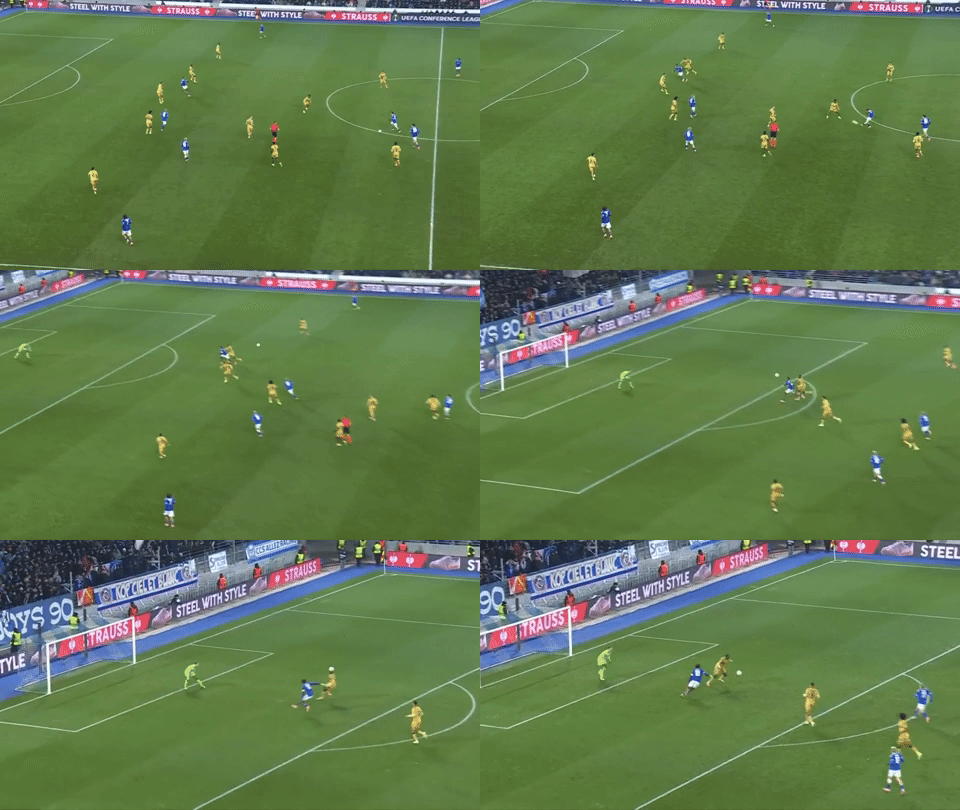
Panichelli is slower but more physically robust than than the Dutch forward, and Rosenior looks to make use of those strengths in attack. The team is instructed to hit long balls into the center or the left flank for the Argentinian to knock down to the two AMs or Moreira. From here Strasbourg look to mount 3v3 or 4v4s in the attacking 3rd.

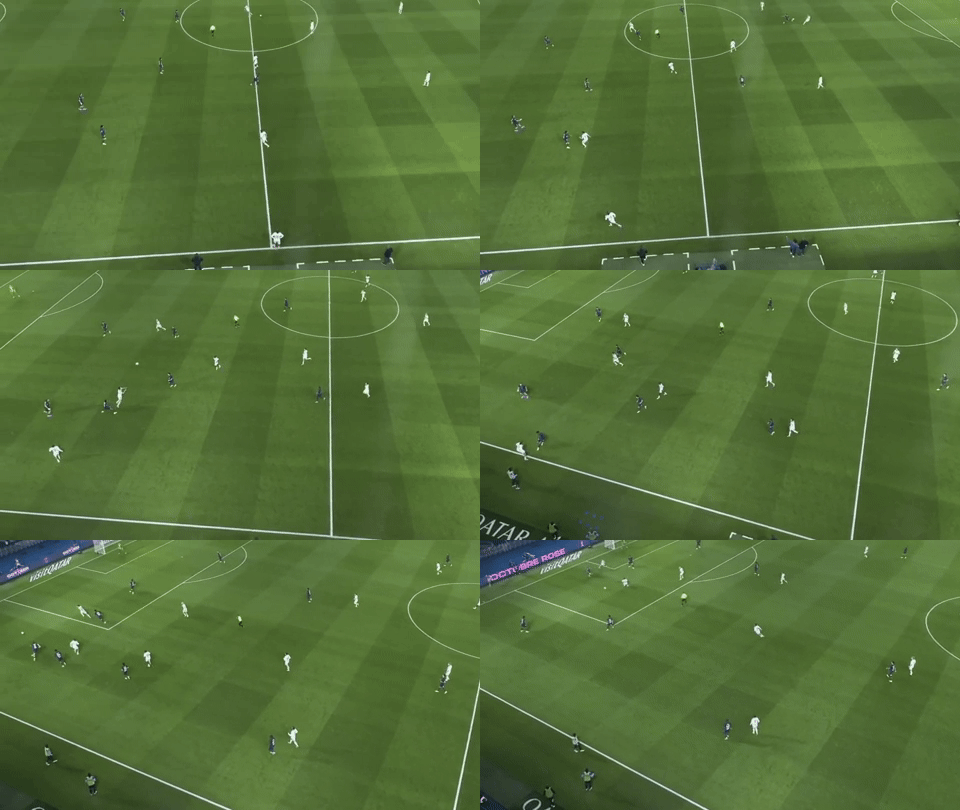

From goalkicks and kickoffs Strasbourg target this same strength, opting to go long to Panichelli to progress the ball into the opponent’s attacking 3rd.

Viable Attacking Strategy?
Strasbourg’s underlyings are worrisome and do not reflect a top 4 side’s pedigree. They are 16th for shot quantity this season, and were 16th last season too. They were 7th for npxG last season and have fallen to 8th halfway through this season. It is the quality of shots that has helped immensely, both last season and this. Strasbourg have topped the charts with 0.14 npxG - indicating that when they do shoot, it’s a high value chance.

There’s also the not-so-small matter of stylistic differences in attack. Chelsea are 2nd in the PL for direct attacks with 2.2 per 90. Strasbourg are 18th in Ligue 1, barely scraping 1 direct attack a game. Strasbourg are also 19th for long passes a game and have the joint-fewest switches in Ligue 1. How quickly and effectively will Rosenior fix those issues at Chelsea?
The Big Questions
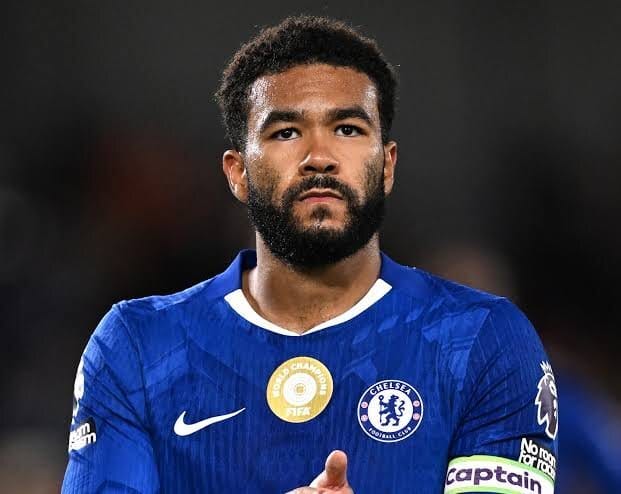
Apart from Enzo Fernandez, there will be some other intriguing decisions for Rosenior to make as he goes about assembling the ideal system. Will he continue to use his fullbacks as the width providers in attack? With Andrey Santos certain to see more game time in midfield, will Reece James return to a role out wide?
Having studied De Zerbi quite closely, will this also see Joao Pedro move into a LW/LAM role where he found success under the Italian? Or even in a two-striker system where he thrived playing off Danny Welbeck? Does he buy into the club’s vision that Estevao’s future is as a #10 or are there better ideas? More importantly, will he be allowed to implement them?
With an easy assignment against Charlton out of the way and 6 more games to go in the remaining 3 weeks in Jan, time and patience are luxuries Rosenior can ill-afford. The Englishman once said “Coaching and management is 90% people skills. It's 10% football.” How well he figures his players out, as people & as professionals, will almost certainly make or break his time at the club.